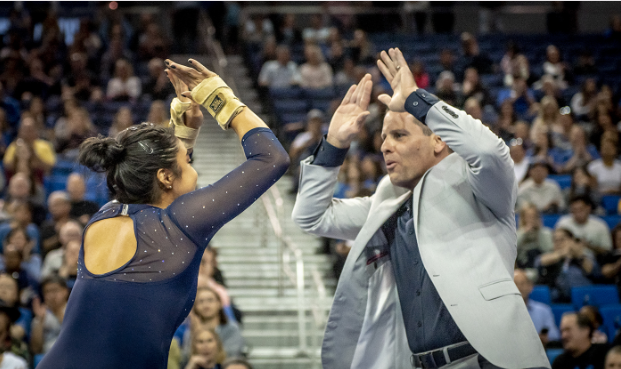

Coaches always tell their athletes “tough it out,” or “leave it all on the court or field,” and walk away thinking it will change all their mindsets. However, when a star player sits in the locker room after a game staring at the floor with a weight that no amount of physical training can lift, the words have no meaning.
To a student-athlete, a coach is often the more influential adult in their life making them the person they will look to when things go wrong. Unfortunately, Coaches often treat mental health as a secondary concern not realizing untreated mental health issues can lead to decreased focus, increased risk of injury, and burnout.
Coaches should prioritize mental health because athletes who are mentally supported perform better, stay in their sport longer, and recover from injuries faster. Beyond sports, this support helps athletes build emotional resilience and life skills that lead to success in school and future careers. These skills prepare them for high-pressure situations and personal setbacks in all areas of life.
Many student-athletes struggling with mental health experience negative impacts at a young age, including anxiety, depression, substance use, and thoughts of suicide, etc., affecting their academic performance, athletic performance, and overall well-being.
These challenges can also lead to isolation and difficulty in seeking support. Young athletes are highly influenceable, so when they don’t make a team, make a mistake, don’t play, or fall short of a goal, it leads them to spiral.
Balancing sports participation with academics, hobbies, friends, family time and other social activities can also contribute more to a student athlete’s mental health. Having too many commitments all at once can leave an athlete feeling overwhelmed and physically exhausted. When every hour is scheduled, the constant pressure to look their best in multiple areas often leads to burnout and increased anxiety.
According to [Wickler, Jimmy Van. “College Athletes Push for More Conversations about Mental Health, but Are Coaches Listening?”] 46% of men and 60% of women athletes feel uncomfortable or scared to ask for mental health assistance from their coaches, often fearing that exposure will be seen as a lack of ‘mental toughness’ and weak athletes.
The Struggle
While fans only see the highlights on the field, many student-athletes are fighting a quiet battle with stress and burnout no trophy can fix. The hardest part of the game isn’t the physical practice, but the mental pressure to stay “tough” even when they are struggling.
Grace Fayles, a freshmen multisport student-athlete, knows this silence. When asked if she felt her coaches cared more about her as a person or an athlete, she responded with “most of the time I feel as if my coaches focus more on how I am performing. If I’m playing bad it’s more about them telling me to focus rather than them asking if I’m okay.” It’s a small gesture, but to many athletes it would make a world of difference.
Instead of hearing “focus more” after a mistake, a simple “Are you doing okay?” could take the weight off any athlete’s shoulders. Without that support, the game that many athletes love starts to feel like it’s a stressful job. When coaches only see the stats and not the student, it’s easy for players to start feeling like they don’t matter unless they’re winning.
The Authority
A coach’s impact should be measured by more than just a win-loss record, it should be measured by how they support their players as people. When a coach prioritizes a student’s well-being over their athleticism they build a bond of trust that lasts much longer than a single season.
Coach Honer, a high school history teacher and indoor track coach, agrees that the person comes before the player. His approach to try and tell if an athlete is struggling is, “I would look into their eyes. Will they be willing to meet me in the eyes? Are they joking around with their friends? Are they isolated from everyone else? Have they been crying or have puffy eyes? I try to notice the small things. I would also look at performance wise. If they were significantly slower than what they should be, I would call them over and ask if everything was going on okay.”
By paying attention to the little quiet signals, Coach Honer shows that even though track can be a high self-pressure sport, it can be a safe space where students can feel seen as important individuals. This level of emotional awareness is exactly what builds the bond of trust that defines a coach far beyond the final score of a meet.
The Solution
The best teams are starting to realize that mental health check-ins are just as important as weight lifting or film study. By creating a people first and open communication environment,
coaches are proving that asking for help isn’t a sign of weakness, it’s a key part of becoming a stronger athlete.
Caroline Cowan, a freshman multisport student-athlete, noticed this firsthand. When asked what a coach has done to make her feel safe, she said, “One coach that made me feel safe and comfortable to talk to was one of the volleyball coaches because the second she saw something wrong or saw me struggling just the tiniest bit, she would come over to me and start talking to bring me back up and if she saw me really struggling. She would pull me out of the drill and take me where no one could see us and try to help me talk through it with me which I thought was very helpful and definitely helpful for other players as well. This made me gain more confidence in myself by having those little talks with my coach.”
When coaches prioritize the person, not just the player, they do better and overall the whole team does better. Little check ups and talks can shift an athletes mindset and it improves mental wellness, builds trust, and enhances better performance knowing that a coach will always be there through the thick and thin.
Coaches who see the little details in athletes and who are also always first to respond, extend trust far beyond any teaching of physical skills and winning games. Student athletes face a huge amount of pressure balancing academics, social lives, and practice schedules, making mental health support a need.
Supporting them not only improves team chemistry but also boosts athletic performance. Caring for a player’s mental well-being is a responsibility, not a weakness. Ultimately, schools should require mental health training for coaches so athletes are valued as people, not just players.