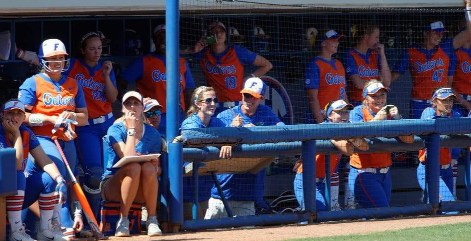
Cheering on your teammates is very important for both their physical and mental performance. This is true especially in the sport of softball, because it is a very mental sport filled with errors and mistakes. Cheering on your teammates can help their mindset after an error, or reduce both personal and peer pressure.
When Genna Chisholm, one of the Pentucket Varsity Softball players, was interviewed, she talked about how important it is to cheer on your teammates and the effect it has on the game. She said, “Cheering from the dugout makes a difference. When it is quiet and I am in the field or up to bat, I am in my own head, but when it is loud in the dugout it gives me confidence knowing my teammates have my back.” This is a good example of how cheering on your teammates can keep them out of their own head and allow them to focus on the game and make good plays. It lets the players know that their teammates have their back, no matter if they do good or bad.
The coach of the Pentucket Varsity Softball team, Julie Freitas, also agrees with this claim. As a former pitcher at Pentucket, she brings up the importance of the pitcher and catcher relationship. She said, “As a pitcher, my catcher always knew when to call a time-out and check in on me.” A pitching position is very difficult because of how easily it is to get into your own head, and how difficult it is to have a perfect performance. She also mentioned the effect the dugout energy had on Pentucket to win the CAL Championship last year. She does “truly believe the energy in the dugout was key to our success. Every person wanted everyone else to succeed. They were all on the fence, screaming, wanting them to perform.” Everyone wanted their teammates to do well, not just themselves.
An inspirational message Coach Freitas will use to encourage the team is “Sometimes you, sometimes me, always us.” This means that even if you are not doing well, one of your teammates must be and cheer them on. She says this almost every practice and game, and even has a sign hanging up in the dugout that says this. Coach Freitas feels that positive encouragement and a good environment are good ways to motivate her players and help them succeed.
Mistakes and errors happen often in softball. Cheering on your teammates can help their spirits after this happens. Kalyn Anderson, a player on the Pentucket JV Softball team, mentioned this in her interview when she said, “It helps remind me that one mistake does not cost the entire game. It gives me confidence that my next play will be better.” Cheering on your teammates after an error can let them know you are not mad at them and can help reduce the pressure on them.
Players for Pentucket do notice a difference in how they play based on the energy in the dugout. The energy helps the players because “It helps everyone feel confident and makes them play better not just as players but as a team.” Cheering also raises adrenaline, especially during a close game or when up to bat. Anderson even said, “It helps me focus because it spikes my energy and adrenaline, which makes me hit harder and farther.”
This is how important cheering on your teammates is, and the effect it has on the outcome of both the game and the overall performance of the players, both mentally and physically.