
Do short breaks during class actually help students stay locked in, or are they just another
brain block? This is a question many students and teachers are debating as schools look for ways
to improve student engagement.
A few students and teachers at Pentucket were interviewed on whether they believe breaks for
students would be helpful or not.
A high schooler, Myla LaRiviere, was interviewed and she says that “taking breaks help me
refocus after completing a lot of work, which raises my focus level. I do not take that long of
breaks, so teachers do not find it to be a problem.”
Next, Mr. Harty, a history teacher, was also interviewed. He was asked, “As a teacher, do
you encourage your students to take breaks? And what would you do to help your students feel
more engaged?” He stated that his students will most likely take advantage of him, so he does
not encourage them to take breaks. This was then followed by, “Changing up the activities they
do in class as well as the assignments.” This may help students become more interested
in participating in class and getting their work done because each day it would be something new
and engaging. “Getting students to work with their peers and spread out the work they are assigned, so doing a little work in the beginning of class, then finishing the rest of it at the end of
class.” This can make the class easier for the students because they will have a break, which can
help make students feel less stressed about getting work done in a certain time frame.
A statistic pulled from the article “Effects on Active School Breaks On Students,” by
National Library of Medicine, shows that taking breaks does not have a positive or negative
effect on learning. Therefore, it can still be beneficial towards the students, since it gives their
brains a short break. The article also states that “results showed positive acute and chronic effects
on active breaks on attentional outcomes… especially on selective attention.” Selective attention
is one of the most important skills used for learning. When it improves, students listen better,
follow directions more clearly, and stay on task more, all because of short breaks.
Yet, beyond what these studies show, a lot of students are already running on empty.
Between staying up late to finish homework, waking up at the crack of dawn, and
trying to keep up with school sports or clubs, hardly any teens are getting a chance to breathe
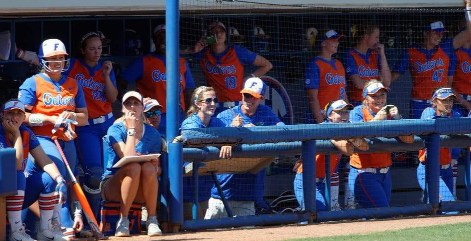
with such a tightly crammed schedule! Athletes especially, are running from class, to practice,
then to a game, all while working to keep their GPAs high.
There are many things that can cause distractions, prompting students to lose focus,
become tired and easily irritable during school hours. This is why a quick break can help provide
much needed attention to get them through the school day.
At the end of the day, whether you are the one teaching or trying not to zone out in the
back row of class, a quick, simple break might just be the small reset button that keeps the class
engaged and prevents students from fully crashing.